On a recent walkthrough for a client in Delaware, one of our sales engineers discovered that out of approximately 100 doors in the facility, 25 failed to comply with applicable codes. If a crisis occurred, the property owner, property manager, architect, contractors, and others could be held liable for any incidents resulting from those compliance failures.
This facility had undergone several rounds of inspections by contractors, safety inspectors, and other security “experts.” This oversight led to a significant unplanned expense which could have been avoided had a qualified security integrator been given the chance to complete a thorough assessment during the building’s planning stages.
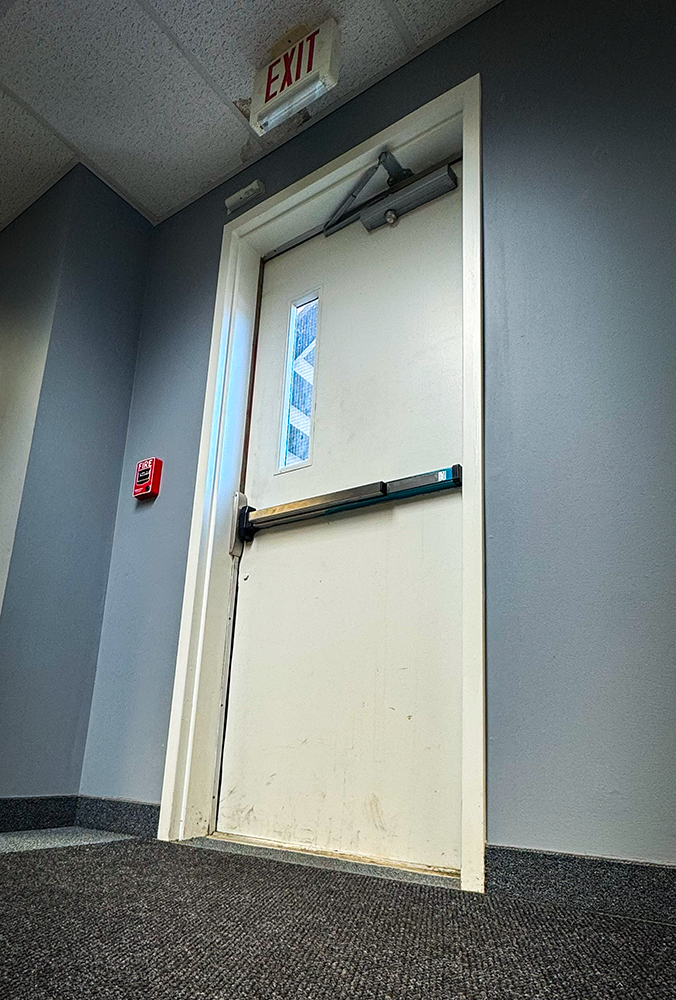
Effectively securing a commercial facility goes beyond placing a camera in the corner of a room or installing a lock or door contact. A single door with a card reader, electronic contact, magnetic lock, or delayed egress device becomes a code-regulated system that requires specific installation practices and thorough knowledge of relevant best practices, codes, and laws.
In this article, we’ll consider a better approach to security system design, including potential liabilities surrounding security systems and the subsequent benefits of involving a qualified security integrator during the early stages of project planning.
Where Does Responsibility Live?
The intricacies of liability and responsibility for any security project depend on the building’s type, intended use, and location. A middle school will have significantly different requirements and codes than a commercial office space or a healthcare facility.
As one example, a one-size-fits-all approach to design might include the wrong lock or swing path for an exit door in the intensive care unit of a hospital, based on lack of knowledge of specific code requirements. A security integrator such as Radius Systems should be expected to bring such an oversight to the attention of the client and identify the correct lock or swing path based on the building, fire, and life safety codes for that locality, county, and state, as well as federal laws and regulations.
It would also be incumbent upon the building owner to document this in writing so that in the event an emergency occurred, or such guidance was never provided, liability is established.
Another way liability is assessed is based on whether the facility had taken measures commensurate to their “neighbors.” This means that a college in Philadelphia would be expected to implement procedures, equipment, and measures that meet or exceed those of other higher learning institutions in the region.
To return to our example of an exit door, this would involve choosing the appropriate materials, including:
- Lock
- Card reader
- Door contact
- Request-to-exit device
- Door closer
- Wiring
- Wire path
- Conduit
- Fire relays
- Hinges
- Fire rating of the door and its frame
It also means that the installation itself must be done in compliance with the door manufacturer’s specifications to ensure that the fire rating is not compromised, and that the location of the door closer and magnetic lock are such that both can fit in the allotted space.
That’s a lot of information to consider, and that’s only for one door. Many facilities have doors that number into the hundreds, each with their own use cases and requirements. An experienced, knowledgeable security integrator can account for all these factors to ensure that your project is in compliance.
Early Involvement Matters
It’s also often the case that security integrators are not given the chance to fully participate in the planning and design stages of a project. This can result in surprise expenses and change orders at best, and significant unforeseen liability at worst.
As part of a fully integrated project delivery approach, it’s best to involve the security integrator as early as possible to allow time to perform a thorough assessment of the facility, conduct research of codes, regulations, and laws, and source vendors and materials for the building’s use cases.
Ample time in the beginning stages also means that everyone involved in the project can coordinate to avoid future issues and subsequent costs. When time runs short or the integrator is brought in at the last minute, there is significant risk due to missing crucial and code-compliant design requirements.
In our door example, choosing the correct hardware and door blank in the planning phase can mean a more expensive upfront cost, but will likely save time, money, and liability in the long run by selecting an inferior or inappropriate product.
Next Steps
Most facilities likely have not conducted recent compliance audits to evaluate the effectiveness and code compliance of their security strategy, if they’ve done one at all. It is easy to assume that if the building passed inspection many years ago, it must still be in compliance. However, hardware replacements, retrofits, renovations, and facility aging can greatly increase the probability of code violations.
Here are some questions to consider as you evaluate your facility’s security:
- When was the last time you or your facility manager tested the status of every door in your facility?
- Has any hardware been changed or updated since the last inspection?
- Do you have documentation that proves your doors maintain their fire rating?
- Have your cameras been inspected to ensure that they cover the appropriate areas?
- Is your camera resolution high enough to see all the activities and area(s) it needs to record?
An experienced, knowledgeable security integrator will properly conduct an exhaustive assessment that accounts for the facility’s purpose, occupants, and applicable codes, regulations, and laws to plan for a secure environment.
The Benefits of an Experienced Integrator
An experienced integrator:
- Reduces surprise change orders
- Provides additional protection in the event of litigation
- Ensures inspection readiness
- Checks and maintains fire ratings
- Aligns security with life safety
- Creates documentation that demonstrates due diligence